 ................... ......
The scholar of the twelfth century Honorius Augustodunensis, also known as Honorius of Autun, was a philosopher and Christian theologian. His work, De Imagine Mundi, contains a passage that reads: in the Ocean lies an island called The Lost (The Lost). far surpassed any other land in charm and all kinds of fertility, but men remains unknown. Now and can always be found by chance, but if one searches for can not be found, and therefore it is called The Lost . This would explain why attempts to locate the island have been unsuccessful, one can only find by chance. " "House" is a word used historically to refer to magic and other supernatural phenomena. The island should "overcome" any other land "in fertility in order to make a previously sterile Jin could impregnate his wife.
.................... ..............

The story of Lost not only part of a physical environment, but also a metaphysical one. The main characters often find themselves (and, by extension, the audience) reviewing and reassessing their pasts as they face different challenges (internal and external, physical and intellectual, rational and emotional, personal and social) presented by the Island
Aware of the power and potential allusive of names, the series creative team has different names of major figures in the history of philosophy. In doing so, they encourage viewers to watch the series not only as a character-based drama, but a series dealing with universal problems.
With a particularly strong emphasis in the eighteenth century, or the Enlightenment, the series relies on great thinkers of that time. This article presents the ideas of these philosophers and their possible connections to Lost.
................. Character ............................................ ............... Philosopher David Hume Desmond
 Hume, David (wikipedia)
David Hume (1711-1776) was a philosopher, empiricist, skeptical, and perhaps to a lesser extent, natural.
Like Desmond, David Hume was Scottish.
David Hume was heavily influenced by the philosopher John Locke (see below).
From 1763 to 1765, Hume was Secretary to Lord Hertford in Paris, where he befriended (and later enemy) of the philosopher Rousseau (see below).
Unlike Desmond, David Hume had very strong views against miracles, which he considered as violations of the laws of nature and, therefore, highly unlikely.
wrote on altruistic principles (illustrated by characters such as Jack and Desmond) and his opposition to the selfish values (of characters like Sawyer).
wrote that free will, in a strange contradiction, you need the destination, despite the apparent conflict between them.
Hume is a "deterministic moderate" or "consistency", which means you believe that all events are determined. However, we still have moral responsibility (which would normally be impossible if the world is completely determined). If "Flashes Before Your Eyes" was inspired by the philosophy of Hume on fate and free will Is greatly distorted. It would be impossible to change the future ... if Charlie was going to die by lightning, so Desmond could not intercede, and was predetermined. The fact that Desmond could intervene means having the ability to change certain events. What is presented in this episode is closer to the fatalism, something which was not in the theories of Hume.
Moreover, Desmond's flashes of Charlie prepared for death in the mirror. Desmond might be able to "change" the future, not changing the facts sooner or later have to happen, but realizing that going to happen. In other words, Desmond's flashes might be part of the flow default reality, which inevitably led to the final situation in the Mirror.
In his posthumously published essay "On Suicide," Hume advocated strongly that was not against the laws of God or nature to end their lives. He explained that people had complete freedom over their own bodies and what to do with them. Using the system key Safe, Desmond seems to use his right itself in a way that David Hume did not consider: the sacrifice for others.
 John Locke Locke, John (wikipedia)
John Locke (1632-1704) was a philosopher of Illustration discussed the relationship between nature and civilization, moving to have a great influence on the founders of democratic governments. I thought, naturally, all men had equal rights to punish those who did not meet the standards. To ensure fairness for all, governments were formed to better administer the laws.
This philosophy parallels Locke's character that embraces both nature and the need for an organization equally among the survivors.
The title of the episode "Tabula Rasa" is a reference to the Latin phrase meaning "blank slate" which was a theory philosophy advocated by Aristotle, Thomas Aquinas and the philosopher John Locke. The concept is that the human mind comes into the world as a "blank slate on which nothing is written," so that all human knowledge derives only from experience.
also took the view that the truth of determinism was irrelevant. He believed that the defining characteristic of voluntary behavior was that individuals had the ability to postpone a decision long enough to discuss the consequences of the choice
Locke's character also emphasizes the concept of "Tabula Rasa" episode "... In Translation "when, in conversation with Shannon says: "Everyone gets a new life on this island, Shannon. Maybe it's time for you to start your own. "
was one of those who developed the Theory of Social Contract, which was postulated as an unwritten agreement between individuals and governments (to give up some natural freedoms in exchange for a life order in civil society and unnatural, as was the case when Jack took over leadership of the group). Locke in particular believed in the right of rebellion in case of tyranny, reason suggests Juliet betray Jack to Ben in his film.
also discusses the philosopher in Bad Twin, which Elio's character describes him as "Uncle fascinating. "A seventeenth-century English, incredibly advanced. It was a great influence on Thomas Jefferson. Locke said that the highest goal of our intelligence is the careful and constant pursuit of true and solid happiness. He says that the best use of our reason is to learn to be happy. "
 Danielle Rousseau Rousseau, Jean-Jacques (wikipedia)
Jean-Jacques Rousseau (1712-1778) was a French philosopher of great influence in the socialist movement and political science.
later said it was the promoter of the idea of "noble savage", that is to say that the man in his natural state, is born innocent and pure until it is corrupted by society and civilization.
The negative influence of society on men in Rousseau's philosophy focuses on the transformation of "amour de soi" (positive self-esteem) in "amour-propre (pride). The "amour de soi represents the instinctive human desire for survival, combined with human power of reason. Moreover, the "amour-propre is artificial and forces man to compare with others, creating unwarranted fear and allowing men to take pleasure in the pain and weakness of men.
Danielle Rousseau's character could be seen as noble savage, having lived in the jungle all these years and now helping the survivors to fight the Others.
Rousseau had five children, but soon left, saying would have been a very bad father and would be better in the orphanage, the very opposite of Rousseau, whose daughter was kidnapped at birth. Sayid Jarrah
Said, Edward (wikipedia)
Edward Wadie Said (Edward Said Wadi) (1935-2003) was an eloquent literary theorist and Palestinian activist. He was professor of English and Comparative Literature at Columbia University and is regarded as a figure in post-colonial theory. Said
is especially known for describing and criticizing the "Orientalism", which he regarded as a constellation of false assumptions underlying Western attitudes toward the Middle East (Orientalism, 1978). "Orientalism" says Western culture makes use of what he perceived as excesses, basic drives, and oddities for Eastern cultures, in order to define against such treatment.
One of the theorists who helped define the concept of "the other]." The other is that which is foreign to "us," aqeullo we can not understand, particularly regarding foreign cultures, just as those who live outside society d ela.
In 1980 Said criticized the poor understanding that Westerners had of the Arab world: "As far as the Americans seem to care, only a slight exaggeration to say that Muslims and Arabs are essentially seen as much as oil suppliers as potential terrorists. A very small detail in the density is that the passion for the Arab-Muslim life has entered the awareness of people whose profession is to report on the Arab world. But instead of that information, what we have is a series of crude and simplified caricatures the Islamic world, presented in a way that will make the Arab world vulnerable to military aggression. " Other
edit
direct references in the blast door map it says "Cogito ergo Dole", meaning "I think, therefore I suffer." It is a variant of the famous phrase of Descartes' I think therefore I am. " While Locke was an influential empiricist, Descartes was an influential rationalist theory completely contrary to empiricism.
 Richard Alpert Alpert, Richard (Ram Dass) (wikipedia)
The Dr. Richard Alpert is a spiritual teacher best known for his bestseller Be Here Now.
In 1967 Alpert traveled to India where he met the American spiritual guide Bhagavan Das. As I drove barefoot from temple to temple, Bhagavan Das Alpert began to teach basic mantras and asanas. After a few months, Bhagavan Das was Alpert to his guru, Neem Karoli Baba, or, as is known, Maharaj-ji. Maharaj-ji soon became the guru of Alper and gave the name "Ram Dass', which means" servant of God. " After returning to America in 1969, Alpert founded several organizations dedicated to expanding spiritual awareness, including the Hanuman Foundation.
Although the exact link between the character of Richard Alpert and this man is still to be explored, it should be stressed that the real Alpert was given the name "servant of God," while Lost that Alpert is Ben's right hand (son of Jacob in the Bible). Mikhail Bakunin
 Bakunin, Mikhail (wikipedia)
Mikhail Bakunin (1814-1876) was a well-known Russian revolutionary and anarchist.
rejected "the systems of government of any name and form," all authority figures, including God. Bakunin denied the concept of "free will" and advocated a materialist explanation of natural phenomena.
should be noted that the point of view of this philosopher is completely opposite to that of Bakunin in the series, Ben and faithful devotee of the cause of the Others to the point of kill Bonnie and Greta and attempting to kill Charlie, Sayid and Kate. However
there a metaphor about the power of character in the series that does fit the character este.En series is apparently immortal, having rejected mandates encuenta Bakunin, one could say that Mikhail series of orders rejected death or dying mandate it imposes the metaphor resto.Esta somehow refers to two characters (the fictional and real)
 Edmund Burke Burke, Edmund (wikipedia)
Edmund Burke (1729-1797) was an Irish statesman, Member of Parliament and leader of the Old Whigs (former Liberals).
was an influential figure in the development of liberalism and is considered the founder of Anglo-American conservative movement. His main ideas include the defense of the American Revolution and of representative democracy, criticism of the French Revolution and radical social change based on untested theories, and the affirmation of the universality of certain moral principles violated by British colonial officials in India.
His views on free will can be seen in this quote from his book "Reflections on the Revolution in France": "It is better to appreciate the virtue and humanity, leaving much to free will, even if you lose things, to try to make men mere machines and instruments of political benevolence.
The only real connection between the political character and appears to be that both are conservative: the real Edmund Burke was a founding member of conservatism (as a political movement), and the character Edmund Burke used the investigation of his ex-wife for his own benefit (a typical feature associated with conservatism).
 Carlyle Boone Carlyle, Thomas (wikipedia)
Thomas Carlyle (1795-1881 ) was a Scottish philosopher and writer influenced the development of socialism.
Carlyle wrote a book called Heroes and hero-worship, in which he spoke of the fundamental flaws of heroes and the challenges that lie ahead. This introduces an interesting paradox in the name of Boone Carlyle. In Lost, Boone is a character who struggle in life to be recognized as a hero (earning the nickname "Captain America" from Shannon). Boone died attempting a heroic act.
"Everywhere the human soul is between a hemisphere of light and another of darkness on the borders of two empires infinite, necessity and free will."
 Anthony Cooper Cooper, Anthony (wikipedia, (in English)
Anthony Ashley-Cooper , First Earl of Shaftesbury (1621-1683) was an English politician who was the mentor and patron of the philosopher John Locke.
addition to helping in a kind of parental relationship, he also thanked Locke for saving his life (Cooper had liver infection). On Lost, Locke saves the life of Anthony Cooper with a kidney transplant.
Anthony Ashley-Cooper, Third Earl of Shaftesbury (1671-1713), grandson of the first Earl, is also a point of comparison with the character. Shaftesbury
This was a moral philosopher of the eighteenth century who said that people are basically good, and that morality is an foundation (although not innate) of humanity. These values come in direct contrast with Locke's father, who is more in the selfish values of the philosopher Thomas Hobbes (and Sawyer).
De Groot, Hugo Hugo De Groot (1583-1645) was a jurist, writer and philosopher Dutch.
was involved in the conflict EMTREE Dutch merchants (who wanted free trade) and governors (who wanted to be a modern state.) The figures in the debate were the merchant and honorary consul and Baron Van Oldenbarneveldt Prince Moritz. Moritz called for the creation of a centralized state and continuing war with Spain. The merchant wanted a state or "strong" or a war, and both perceived as harmful to trade. There is a similar conflict in''Lost''between the Hanso Foundation, which seeks to intervene in history or nature (altering the equation Valenzetti) and the Hostiles, trying to prevent it. De Groot
supported the position of the merchant and in 1604 the Dutch East India Company was assigned to be his lawyer, who had to justify the capture of Portuguese ships in Indian waters. However, only little remains of what was published in 1609 under the title Mare Liberum (The Free Seas). This reminds the roles of Gerald and Karen DeGroot, working under the auspices of the Hanso Foundation, which has strong links with a false maritime trade company of The Lost Experience, called United Merchant Marines Copenhagen. "
The main argument of Mare Liberum was that water and air are not the product of human labor, so that property can not be restricted to anyone. This is reflected 1) in the discussion that the survivors of Flight 815 (especially Locke) have with the Others, who claim that "this is our island, and 2) the conflict between the Hanso Foundation and the Hostiles.
personal motto of De Groot: "Ruit hour." (The clock is ticking.)
Latest De Groot's words, "having learned so much, I have not achieved anything."
The date of birth and death numbers contain 4, 15 and 8, 16 and 4.
Aware of the power and potential allusive of names, the series creative team has different names of major figures in the history of philosophy. In doing so, they encourage viewers to watch the series not only as a character-based drama, but a series dealing with universal problems.
With a particularly strong emphasis in the eighteenth century, or the Enlightenment, the series relies on great thinkers of that time. This article presents the ideas of these philosophers and their possible connections to Lost.
................. Character ............................................ ............... Philosopher David Hume Desmond
 Hume, David (wikipedia)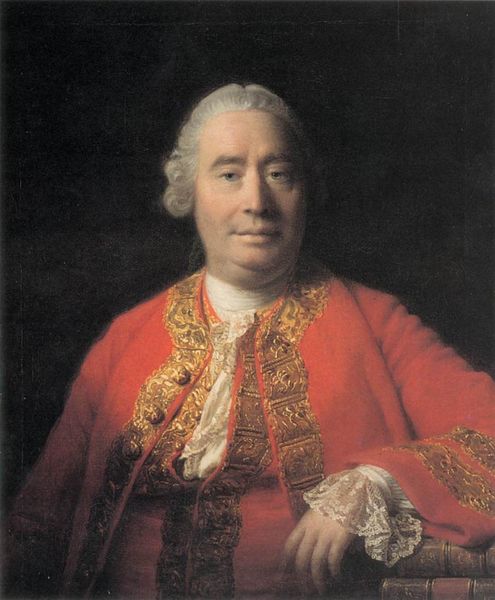
David Hume (1711-1776) was a philosopher, empiricist, skeptical, and perhaps to a lesser extent, natural.
Like Desmond, David Hume was Scottish.
David Hume was heavily influenced by the philosopher John Locke (see below).
From 1763 to 1765, Hume was Secretary to Lord Hertford in Paris, where he befriended (and later enemy) of the philosopher Rousseau (see below).
Unlike Desmond, David Hume had very strong views against miracles, which he considered as violations of the laws of nature and, therefore, highly unlikely.
wrote on altruistic principles (illustrated by characters such as Jack and Desmond) and his opposition to the selfish values (of characters like Sawyer).
wrote that free will, in a strange contradiction, you need the destination, despite the apparent conflict between them.
Hume is a "deterministic moderate" or "consistency", which means you believe that all events are determined. However, we still have moral responsibility (which would normally be impossible if the world is completely determined). If "Flashes Before Your Eyes" was inspired by the philosophy of Hume on fate and free will Is greatly distorted. It would be impossible to change the future ... if Charlie was going to die by lightning, so Desmond could not intercede, and was predetermined. The fact that Desmond could intervene means having the ability to change certain events. What is presented in this episode is closer to the fatalism, something which was not in the theories of Hume.
Moreover, Desmond's flashes of Charlie prepared for death in the mirror. Desmond might be able to "change" the future, not changing the facts sooner or later have to happen, but realizing that going to happen. In other words, Desmond's flashes might be part of the flow default reality, which inevitably led to the final situation in the Mirror.
In his posthumously published essay "On Suicide," Hume advocated strongly that was not against the laws of God or nature to end their lives. He explained that people had complete freedom over their own bodies and what to do with them. Using the system key Safe, Desmond seems to use his right itself in a way that David Hume did not consider: the sacrifice for others.
 John Locke Locke, John (wikipedia)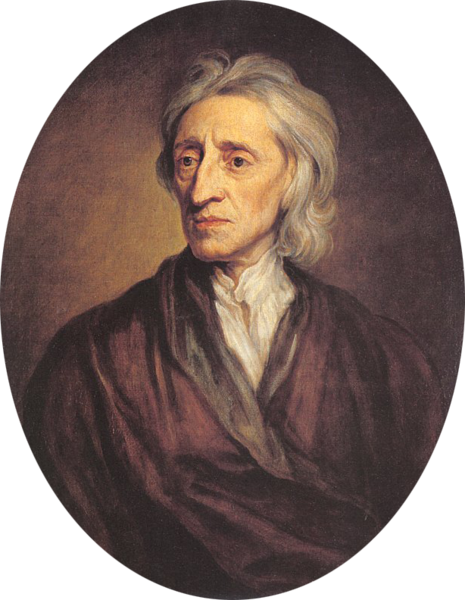
John Locke (1632-1704) was a philosopher of Illustration discussed the relationship between nature and civilization, moving to have a great influence on the founders of democratic governments. I thought, naturally, all men had equal rights to punish those who did not meet the standards. To ensure fairness for all, governments were formed to better administer the laws.
This philosophy parallels Locke's character that embraces both nature and the need for an organization equally among the survivors.
The title of the episode "Tabula Rasa" is a reference to the Latin phrase meaning "blank slate" which was a theory philosophy advocated by Aristotle, Thomas Aquinas and the philosopher John Locke. The concept is that the human mind comes into the world as a "blank slate on which nothing is written," so that all human knowledge derives only from experience.
also took the view that the truth of determinism was irrelevant. He believed that the defining characteristic of voluntary behavior was that individuals had the ability to postpone a decision long enough to discuss the consequences of the choice
Locke's character also emphasizes the concept of "Tabula Rasa" episode "... In Translation "when, in conversation with Shannon says: "Everyone gets a new life on this island, Shannon. Maybe it's time for you to start your own. "
was one of those who developed the Theory of Social Contract, which was postulated as an unwritten agreement between individuals and governments (to give up some natural freedoms in exchange for a life order in civil society and unnatural, as was the case when Jack took over leadership of the group). Locke in particular believed in the right of rebellion in case of tyranny, reason suggests Juliet betray Jack to Ben in his film.
also discusses the philosopher in Bad Twin, which Elio's character describes him as "Uncle fascinating. "A seventeenth-century English, incredibly advanced. It was a great influence on Thomas Jefferson. Locke said that the highest goal of our intelligence is the careful and constant pursuit of true and solid happiness. He says that the best use of our reason is to learn to be happy. "
 Danielle Rousseau Rousseau, Jean-Jacques (wikipedia)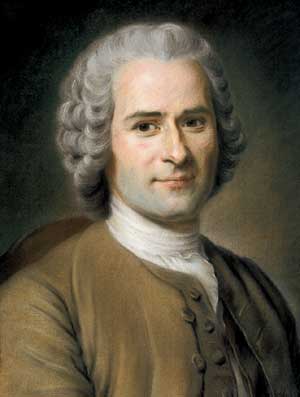
Jean-Jacques Rousseau (1712-1778) was a French philosopher of great influence in the socialist movement and political science.
later said it was the promoter of the idea of "noble savage", that is to say that the man in his natural state, is born innocent and pure until it is corrupted by society and civilization.
The negative influence of society on men in Rousseau's philosophy focuses on the transformation of "amour de soi" (positive self-esteem) in "amour-propre (pride). The "amour de soi represents the instinctive human desire for survival, combined with human power of reason. Moreover, the "amour-propre is artificial and forces man to compare with others, creating unwarranted fear and allowing men to take pleasure in the pain and weakness of men.
Danielle Rousseau's character could be seen as noble savage, having lived in the jungle all these years and now helping the survivors to fight the Others.
Rousseau had five children, but soon left, saying would have been a very bad father and would be better in the orphanage, the very opposite of Rousseau, whose daughter was kidnapped at birth. Sayid Jarrah
Said, Edward
 (wikipedia)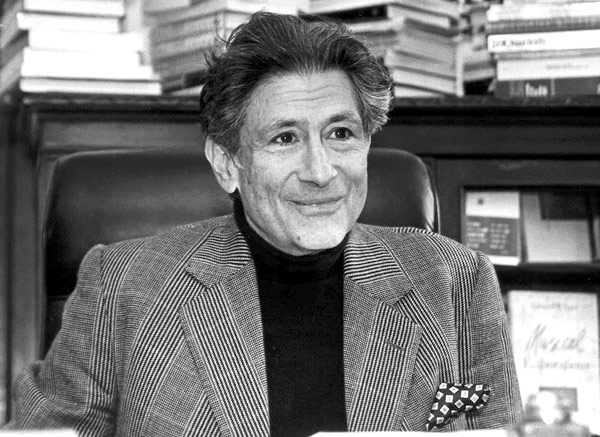
Edward Wadie Said (Edward Said Wadi) (1935-2003) was an eloquent literary theorist and Palestinian activist. He was professor of English and Comparative Literature at Columbia University and is regarded as a figure in post-colonial theory. Said
is especially known for describing and criticizing the "Orientalism", which he regarded as a constellation of false assumptions underlying Western attitudes toward the Middle East (Orientalism, 1978). "Orientalism" says Western culture makes use of what he perceived as excesses, basic drives, and oddities for Eastern cultures, in order to define against such treatment.
One of the theorists who helped define the concept of "the other]." The other is that which is foreign to "us," aqeullo we can not understand, particularly regarding foreign cultures, just as those who live outside society d ela.
In 1980 Said criticized the poor understanding that Westerners had of the Arab world: "As far as the Americans seem to care, only a slight exaggeration to say that Muslims and Arabs are essentially seen as much as oil suppliers as potential terrorists. A very small detail in the density is that the passion for the Arab-Muslim life has entered the awareness of people whose profession is to report on the Arab world. But instead of that information, what we have is a series of crude and simplified caricatures the Islamic world, presented in a way that will make the Arab world vulnerable to military aggression. " Other
edit
direct references in the blast door map it says "Cogito ergo Dole", meaning "I think, therefore I suffer." It is a variant of the famous phrase of Descartes' I think therefore I am. " While Locke was an influential empiricist, Descartes was an influential rationalist theory completely contrary to empiricism.
 Richard Alpert Alpert, Richard (Ram Dass) (wikipedia)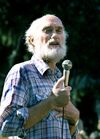
The Dr. Richard Alpert is a spiritual teacher best known for his bestseller Be Here Now.
In 1967 Alpert traveled to India where he met the American spiritual guide Bhagavan Das. As I drove barefoot from temple to temple, Bhagavan Das Alpert began to teach basic mantras and asanas. After a few months, Bhagavan Das was Alpert to his guru, Neem Karoli Baba, or, as is known, Maharaj-ji. Maharaj-ji soon became the guru of Alper and gave the name "Ram Dass', which means" servant of God. " After returning to America in 1969, Alpert founded several organizations dedicated to expanding spiritual awareness, including the Hanuman Foundation.
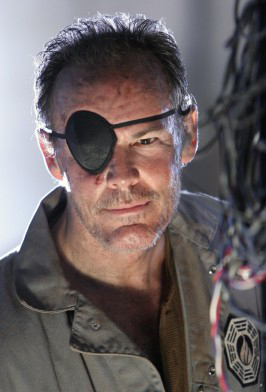
Although the exact link between the character of Richard Alpert and this man is still to be explored, it should be stressed that the real Alpert was given the name "servant of God," while Lost that Alpert is Ben's right hand (son of Jacob in the Bible). Mikhail Bakunin
 Bakunin, Mikhail (wikipedia)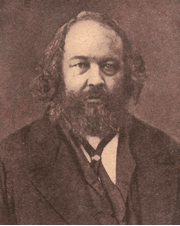
Mikhail Bakunin (1814-1876) was a well-known Russian revolutionary and anarchist.
rejected "the systems of government of any name and form," all authority figures, including God. Bakunin denied the concept of "free will" and advocated a materialist explanation of natural phenomena.
should be noted that the point of view of this philosopher is completely opposite to that of Bakunin in the series, Ben and faithful devotee of the cause of the Others to the point of kill Bonnie and Greta and attempting to kill Charlie, Sayid and Kate. However
there a metaphor about the power of character in the series that does fit the character este.En series is apparently immortal, having rejected mandates encuenta Bakunin, one could say that Mikhail series of orders rejected death or dying mandate it imposes the metaphor resto.Esta somehow refers to two characters (the fictional and real)
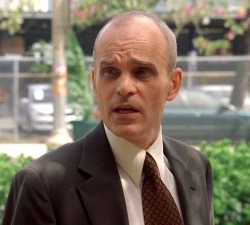 Edmund Burke Burke, Edmund (wikipedia)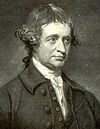
Edmund Burke (1729-1797) was an Irish statesman, Member of Parliament and leader of the Old Whigs (former Liberals).
was an influential figure in the development of liberalism and is considered the founder of Anglo-American conservative movement. His main ideas include the defense of the American Revolution and of representative democracy, criticism of the French Revolution and radical social change based on untested theories, and the affirmation of the universality of certain moral principles violated by British colonial officials in India.
His views on free will can be seen in this quote from his book "Reflections on the Revolution in France": "It is better to appreciate the virtue and humanity, leaving much to free will, even if you lose things, to try to make men mere machines and instruments of political benevolence.
The only real connection between the political character and appears to be that both are conservative: the real Edmund Burke was a founding member of conservatism (as a political movement), and the character Edmund Burke used the investigation of his ex-wife for his own benefit (a typical feature associated with conservatism).
 Carlyle Boone Carlyle, Thomas (wikipedia)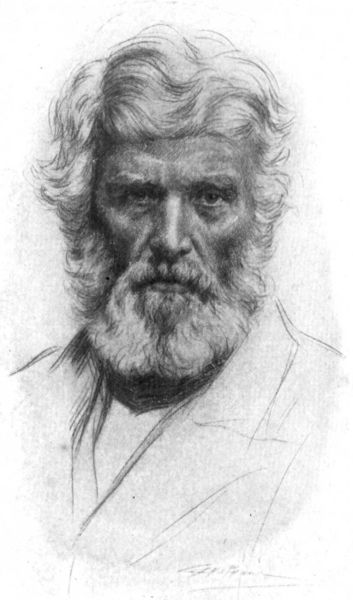
Thomas Carlyle (1795-1881 ) was a Scottish philosopher and writer influenced the development of socialism.
Carlyle wrote a book called Heroes and hero-worship, in which he spoke of the fundamental flaws of heroes and the challenges that lie ahead. This introduces an interesting paradox in the name of Boone Carlyle. In Lost, Boone is a character who struggle in life to be recognized as a hero (earning the nickname "Captain America" from Shannon). Boone died attempting a heroic act.
"Everywhere the human soul is between a hemisphere of light and another of darkness on the borders of two empires infinite, necessity and free will."
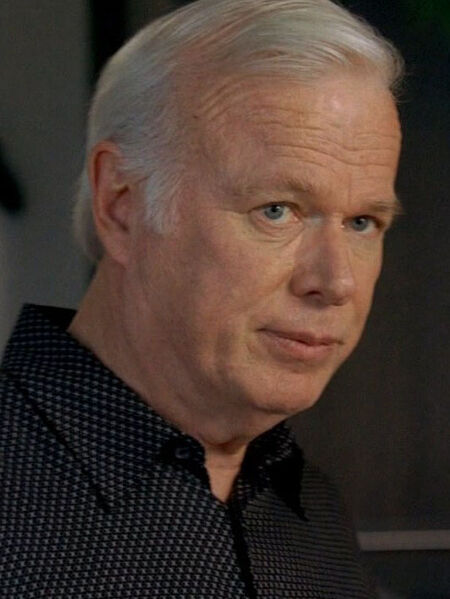 Anthony Cooper Cooper, Anthony (wikipedia, (in English)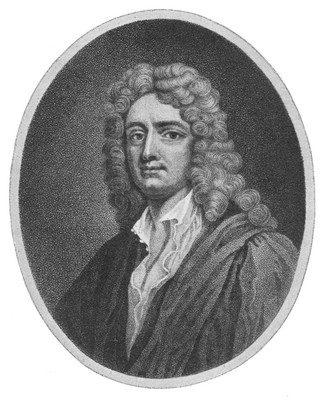
Anthony Ashley-Cooper , First Earl of Shaftesbury (1621-1683) was an English politician who was the mentor and patron of the philosopher John Locke.
addition to helping in a kind of parental relationship, he also thanked Locke for saving his life (Cooper had liver infection). On Lost, Locke saves the life of Anthony Cooper with a kidney transplant.
Anthony Ashley-Cooper, Third Earl of Shaftesbury (1671-1713), grandson of the first Earl, is also a point of comparison with the character. Shaftesbury
This was a moral philosopher of the eighteenth century who said that people are basically good, and that morality is an foundation (although not innate) of humanity. These values come in direct contrast with Locke's father, who is more in the selfish values of the philosopher Thomas Hobbes (and Sawyer).
De Groot, Hugo Hugo De Groot (1583-1645) was a jurist, writer and philosopher Dutch.
was involved in the conflict EMTREE Dutch merchants (who wanted free trade) and governors (who wanted to be a modern state.) The figures in the debate were the merchant and honorary consul and Baron Van Oldenbarneveldt Prince Moritz. Moritz called for the creation of a centralized state and continuing war with Spain. The merchant wanted a state or "strong" or a war, and both perceived as harmful to trade. There is a similar conflict in''Lost''between the Hanso Foundation, which seeks to intervene in history or nature (altering the equation Valenzetti) and the Hostiles, trying to prevent it. De Groot
supported the position of the merchant and in 1604 the Dutch East India Company was assigned to be his lawyer, who had to justify the capture of Portuguese ships in Indian waters. However, only little remains of what was published in 1609 under the title Mare Liberum (The Free Seas). This reminds the roles of Gerald and Karen DeGroot, working under the auspices of the Hanso Foundation, which has strong links with a false maritime trade company of The Lost Experience, called United Merchant Marines Copenhagen. "
The main argument of Mare Liberum was that water and air are not the product of human labor, so that property can not be restricted to anyone. This is reflected 1) in the discussion that the survivors of Flight 815 (especially Locke) have with the Others, who claim that "this is our island, and 2) the conflict between the Hanso Foundation and the Hostiles.
personal motto of De Groot: "Ruit hour." (The clock is ticking.)
Latest De Groot's words, "having learned so much, I have not achieved anything."
The date of birth and death numbers contain 4, 15 and 8, 16 and 4.
addition of Western philosophy, history of "Lost" has many references to Eastern philosophies and ideologies such as DHARMA logos, "Namaste" and the number 108. All this can be seen best in the article Religion and ideologies.
 Burrus Fred Skinner
Although BF Skinner identified himself as a scientist and psychologist, wrote what may be considered a work of philosophy in 1972 called "Beyond Freedom and Dignity." Orientation Video Swan Skinner mentioned as one of the inspirations for the DHARMA Initiative.
Skinner maintained that there is no free will or freedom. Skinner's concept of human freedom was a situation in which humans do not feel the control exercised over them and their behavior.
The other big idea was that Skinner was only one way to change (or improve) to humans and that it was changing the environment itself. This is reflected in the DHARMA Initiative attempts to change the equation Valenzetti.
 James "Sawyer" Ford ...... Tom Sawyer
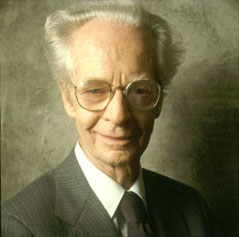 Burrus Fred Skinner
 Although BF Skinner identified himself as a scientist and psychologist, wrote what may be considered a work of philosophy in 1972 called "Beyond Freedom and Dignity." Orientation Video Swan Skinner mentioned as one of the inspirations for the DHARMA Initiative.
Skinner maintained that there is no free will or freedom. Skinner's concept of human freedom was a situation in which humans do not feel the control exercised over them and their behavior.
The other big idea was that Skinner was only one way to change (or improve) to humans and that it was changing the environment itself. This is reflected in the DHARMA Initiative attempts to change the equation Valenzetti.
 James "Sawyer" Ford ...... Tom Sawyer
 The Adventures of Tom Sawyer is a novel by American writer Mark Twain published in 1876 now considered a masterpiece of literature . The adventures of childhood Tom Sawyer, a boy growing up in the antebellum Southern United States, in a population of the coast of Mississippi .
The Pythagoreans and numbers
Pythagoreans From Wikipedia, the free encyclopedia
..................
Pythagoreans Group celebrating the sunrise. Oil Fyodor Bronnikov, (1827-1902).
The Pythagoreans were a Greek organization of astronomers, musicians, mathematicians and philosophers, who believed that all things are essentially numbers. The group kept secret the discovery of irrational numbers, and legend has it that a member was not stifled by secrecy (see Hippasus of Metaponto).
The pentagram (five pointed star) was an important religious symbol used by the Pythagoreans, who called it "health."
The Tetraktys: the number ten
Tetraktys : triangle consisting of ten points arranged in four lines: one, two, three, and four points in each row. Mystical symbol representing the number ten.
The Tetraktys, which had the sacred figure, indicating that the Pythagoreans regarded numbers as well. This figure shows that 10 is the sum 1 +2 +3 +4, that is, which is the sum of the first four integers. For it made the oath transmitted as Pythagorean, made on behalf of Pythagoras himself, but without naming it, "by whom sent Tetraktys our soul." The Tetraktys is the perfect number and the key to the doctrine. It is possible that plays a role in various degrees of metamorphosis of the soul.
Ten has a sense of wholeness, end, back to the drive ending the cycle of the first nine numbers. For the Pythagoreans Tetraktys is holy, the most sacred of all numbers to symbolize the universal creation, the source and root of eternal nature, and if everything flows from it, everything returns to it. It is therefore an image of the entire motion.
form a triangle The Tetraktys 10 points placed in four lines, as follows: The Santa Tetraktys
Pythagorean
1. The Unit: The Divine, the source of all things. Being unmanifested.
2. The Dyad: doubling the point, the origin of male-female couples. Internal dualism of all beings.
3. The Triad: The three levels of the world: heaven, earth, hell, and all trinities.
4. The Quaternary: the four elements of earth, air, fire and water, and with them the multiplicity of the material universe.
This set is the Decade, the entire Universe: 4: 1 + 2 + 3 + 4 = 10 = 1 + 0 = 1.
aureus Number
Pythagoreans From Wikipedia, the free encyclopedia
..................
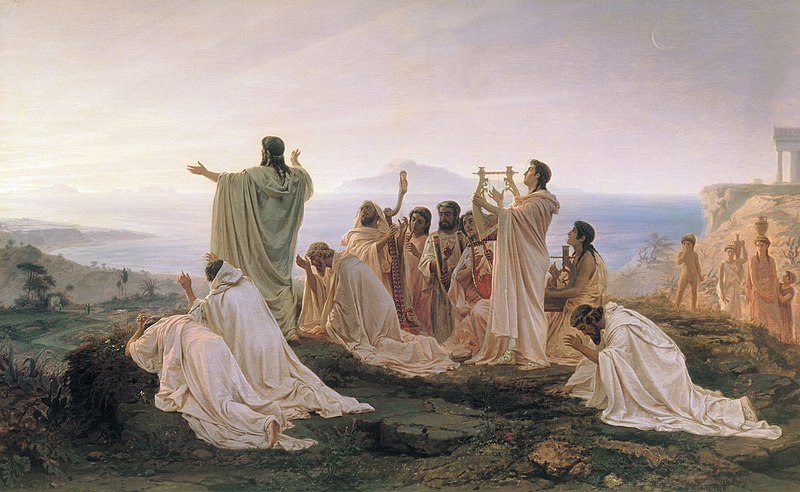
Pythagoreans Group celebrating the sunrise. Oil Fyodor Bronnikov, (1827-1902).
The Pythagoreans were a Greek organization of astronomers, musicians, mathematicians and philosophers, who believed that all things are essentially numbers. The group kept secret the discovery of irrational numbers, and legend has it that a member was not stifled by secrecy (see Hippasus of Metaponto).
The pentagram (five pointed star) was an important religious symbol used by the Pythagoreans, who called it "health."
The Tetraktys: the number ten

Tetraktys : triangle consisting of ten points arranged in four lines: one, two, three, and four points in each row. Mystical symbol representing the number ten.
The Tetraktys, which had the sacred figure, indicating that the Pythagoreans regarded numbers as well. This figure shows that 10 is the sum 1 +2 +3 +4, that is, which is the sum of the first four integers. For it made the oath transmitted as Pythagorean, made on behalf of Pythagoras himself, but without naming it, "by whom sent Tetraktys our soul." The Tetraktys is the perfect number and the key to the doctrine. It is possible that plays a role in various degrees of metamorphosis of the soul.
Ten has a sense of wholeness, end, back to the drive ending the cycle of the first nine numbers. For the Pythagoreans Tetraktys is holy, the most sacred of all numbers to symbolize the universal creation, the source and root of eternal nature, and if everything flows from it, everything returns to it. It is therefore an image of the entire motion.
form a triangle The Tetraktys 10 points placed in four lines, as follows: The Santa Tetraktys
Pythagorean
1. The Unit: The Divine, the source of all things. Being unmanifested.
2. The Dyad: doubling the point, the origin of male-female couples. Internal dualism of all beings.
3. The Triad: The three levels of the world: heaven, earth, hell, and all trinities.
4. The Quaternary: the four elements of earth, air, fire and water, and with them the multiplicity of the material universe.
This set is the Decade, the entire Universe: 4: 1 + 2 + 3 + 4 = 10 = 1 + 0 = 1.
aureus Number
The flight 618 reminds us that other number full of "magical" properties
From Wikipedia, the free encyclopedia
A golden section is a division of a segment in two proportions as given by the golden number. The total length a + b is the longest segment is a segment as short b.
The golden ratio or golden (also called silver number, extreme and mean ratio, 1 golden ratio, golden ratio, golden section, golden ratio, divine proportion) represented by the Greek letter φ (fi) (in honor of the Greek sculptor Phidias) is the irrational number: 2
From Wikipedia, the free encyclopedia
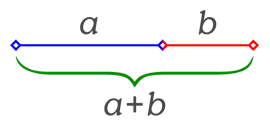
A golden section is a division of a segment in two proportions as given by the golden number. The total length a + b is the longest segment is a segment as short b.
The golden ratio or golden (also called silver number, extreme and mean ratio, 1 golden ratio, golden ratio, golden section, golden ratio, divine proportion) represented by the Greek letter φ (fi) (in honor of the Greek sculptor Phidias) is the irrational number: 2
.................. 
is an algebraic number which has many interesting properties and was discovered in antiquity, not as "unity" but as a relationship or ratio between line segments. This proportion is found in geometric figures and in the nature of elements such as shells, ribs of the leaves of some trees, thick branches, etc.
also attributed a special aesthetic character to the objects that follow the golden ratio, and a mystical importance. Throughout history, importance has been attributed in various works of architecture and other arts, though some of these cases have been objectionable to mathematics and archeology.
 ............. Dharma
In Hinduism, dharma is the universal law of nature, law is in each individual as in the whole universe. A cosmic level this law is seen expressed by regular and cyclical movements. For this reason, represents the dharma like a wheel (dharma-chakra) which turns or rotates on itself. This symbol is found on the flag of India.

is an algebraic number which has many interesting properties and was discovered in antiquity, not as "unity" but as a relationship or ratio between line segments. This proportion is found in geometric figures and in the nature of elements such as shells, ribs of the leaves of some trees, thick branches, etc.
also attributed a special aesthetic character to the objects that follow the golden ratio, and a mystical importance. Throughout history, importance has been attributed in various works of architecture and other arts, though some of these cases have been objectionable to mathematics and archeology.
 ............. Dharma
 In Hinduism, dharma is the universal law of nature, law is in each individual as in the whole universe. A cosmic level this law is seen expressed by regular and cyclical movements. For this reason, represents the dharma like a wheel (dharma-chakra) which turns or rotates on itself. This symbol is found on the flag of India.


0 comments:
Post a Comment